
Hours at a desk, evenings on the sofa and a phone that's always in hand: most of us spend much of the day leaning forward. Over time that becomes the position our body settles into. The good news is that better posture isn't about one big fix. It's a handful of small habits that add up, and four weeks is a realistic amount of time to build them.
Why posture drifts
Posture is less about "sitting up straight" and more about how long you stay in any one position. Muscles at the front of the body, like the chest and hip flexors, tend to tighten when we sit for long stretches, while the muscles of the upper back that hold our shoulders in place get less work. The fix is a mix of noticing, moving more often, strengthening the upper back and stretching what's tight.
Before you start: a quick desk check
- Screen: the top of the screen at or slightly below eye level. A few books under a laptop work fine.
- Chair: feet flat on the floor, knees roughly level with your hips, back supported.
- Arms: elbows close to your sides and bent at about 90 degrees when typing.
- Phone: bring it up towards eye level instead of dropping your head down to it.
Week 1: Notice
Set a gentle reminder every hour. When it goes off, take ten seconds: roll your shoulders up, back and down, lift your chest slightly and line your ears up over your shoulders. Stand up at least once an hour, even if only to refill your water.
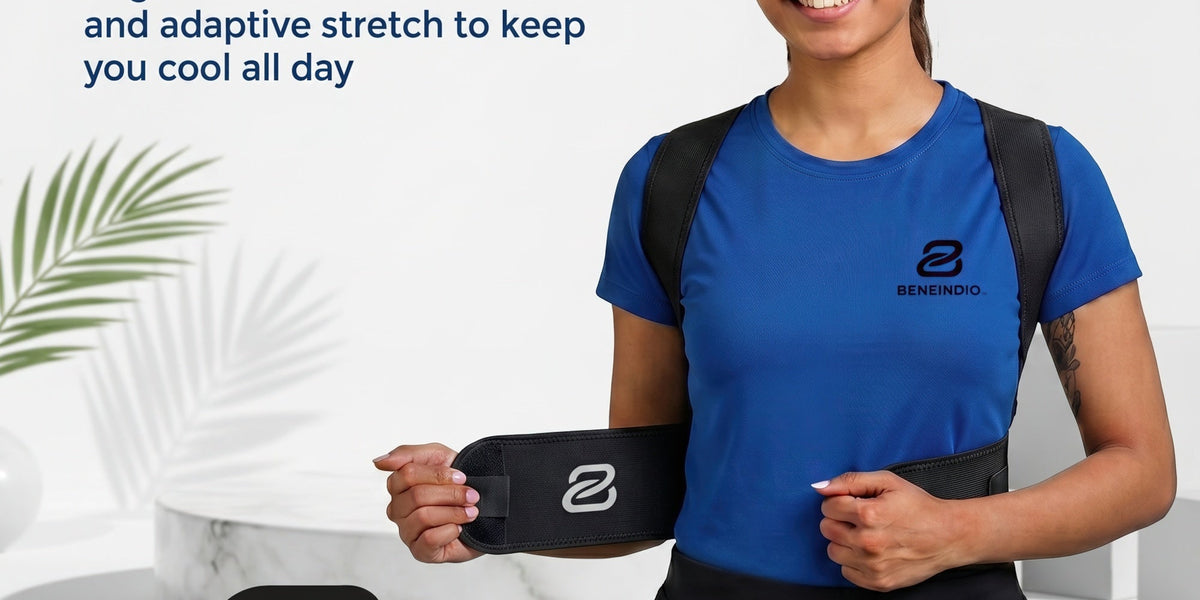
If you like a physical cue, the Beneindio Posture Corrector worn for 20 to 30 minutes a day can act as a reminder while you work. Think of it as a prompt, not a brace: short sessions work better than wearing one all day.
Week 2: Strengthen
Add about 10 minutes of upper-back and core work, three times this week. A light resistance band is all you need:
- Band pull-aparts, 2 sets of 12: hold a band in front of your chest and pull it apart, squeezing your shoulder blades.
- Seated band rows, 2 sets of 12: loop the band around your feet and pull your elbows back.
- Glute bridges, 2 sets of 12: strong hips take pressure off your lower back when you sit.
- Dead bugs, 2 sets of 8 each side: slow and controlled, lower back gently pressed to the floor.
Week 3: Stretch
Keep the strength work and add about 10 minutes of stretching on most days, focusing on the areas that tighten when we sit:
- Doorway chest stretch: forearms on a door frame, step gently through, hold 30 seconds.
- Half-kneeling hip flexor stretch: hold 30 seconds each side.
- Thoracic rotations: on hands and knees, one hand behind your head, rotate slowly, 8 each side.
- Child's pose: breathe slowly for 30 to 60 seconds.
Week 4: Make it yours
By now the reminders should need less effort. Keep the moves that felt good, drop the ones that didn't, and fit them where they suit your day: bands before breakfast, stretches after work, pull-aparts while the kettle boils. The goal isn't a perfect routine; it's one you'll still be doing next month.
Small habits that help all day
- Take calls standing or walking when you can.
- Keep a water bottle nearby: refilling it gets you up and moving.
- Switch sides when you carry a bag, or use a waist bag or backpack to spread the load.
- Notice your posture on the sofa, not just at your desk.
A note on comfort
Posture habits are about feeling more at ease in your body, not a medical treatment. If you have ongoing pain, an injury or a health condition, please speak to a doctor or physiotherapist before starting a new routine.
Want more band moves for home? Read Resistance Bands at Home: 5 Real Benefits and a Simple Starter Routine.