
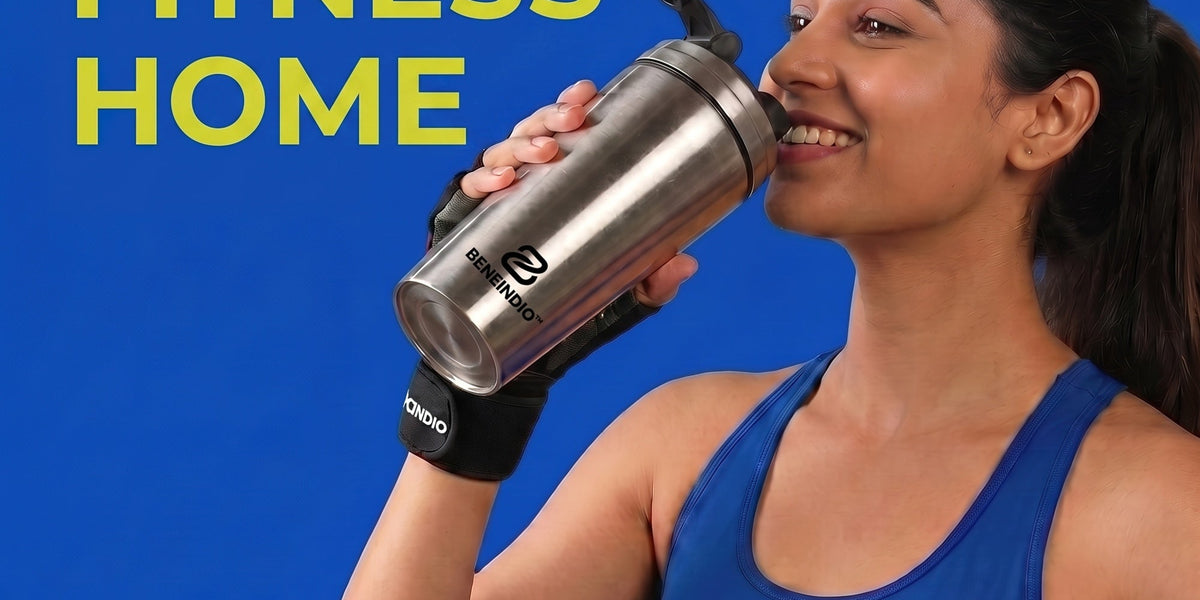
Whether you mix protein, sattu, buttermilk or just carry water through the day, your shaker bottle gets used a lot. Most people start with plastic because it's cheap and light. Sooner or later many switch to stainless steel. So is a metal shaker really better? Here's an honest look at both, including where plastic still makes sense.
Smell and stains
This is the reason most people switch. Plastic has tiny pores and scratches that trap residue, so after a few weeks many plastic shakers hold on to a sour or milky smell no matter how often you wash them. Coloured drinks can stain them too.
Stainless steel is non-porous. There's nowhere for residue to hide, so a quick rinse and a proper wash usually leave it smelling neutral, even after milk-based drinks. If you've ever thrown away a plastic shaker because of the smell, this difference alone is worth it.
Cleaning and hygiene
Both materials can be kept clean, but steel is more forgiving. It tolerates hot water well and doesn't develop the fine scratches that make plastic harder to clean over time. Whichever you use, the habit matters more than the material: rinse your shaker soon after using it, wash it with warm soapy water and let all the parts dry fully, lid off, before you close it again.
Durability
Plastic shakers crack when dropped, their lids warp in hot water, and they wear out. A steel body can take everyday knocks in a bag or car without breaking; at worst it picks up a small dent. That longer life is the main reason a steel shaker costs more upfront but often works out cheaper over time.
What about BPA?
Older plastic bottles sometimes contained BPA, which is why it's still a common worry. Today many plastic shakers are labelled BPA-free, so this is less of a deciding factor than it used to be. The real, everyday differences between steel and plastic are smell, staining and how long the bottle lasts. If you prefer to keep plastic away from your drinks, a steel body gives you that peace of mind.
Where plastic still wins
- Weight: plastic is lighter, which some people notice when carrying a full bottle all day.
- Price: plastic costs less upfront.
- Seeing inside: clear plastic lets you check whether your drink is fully mixed.
If you only shake a drink occasionally and don't mind replacing the bottle every few months, plastic is fine. If you use it every day, steel usually makes more sense.
How to choose a good steel shaker
- Food-grade stainless steel: check that the body is described as food-grade.
- A lid that seals well: a leak in your bag is the fastest way to regret any bottle.
- The right size: around 600 to 750 ml leaves room for a full drink plus space to shake.
- A mixer that suits you: a whisk ball or mixing grid helps break up powders.
- A wide mouth: easier to add powder and much easier to clean.
Not just for protein
A good shaker earns its place beyond workouts. Use it for chaas, sattu drinks, lassi, lemon water, electrolyte drinks or overnight oats, or simply as a water bottle that doesn't smell of yesterday.
Looking after a steel shaker
- Rinse it soon after use, especially after milk-based drinks.
- Wash with warm water and mild soap; a bottle brush helps reach the base.
- Avoid harsh scourers that scratch the surface.
- Dry all parts fully with the lid off before storing.
The verdict
For everyday use, stainless steel is the better long-term choice: it stays fresher, lasts longer and is easier to live with. Plastic still makes sense if weight and price matter most to you. Our 750 ml stainless steel shaker is made from food-grade stainless steel and sized for a full drink with room to shake. Browse more everyday essentials in our accessories collection.