
The short answer
A posture corrector can help, but as a reminder rather than a fix. It gives your shoulders a gentle cue when you start to round forward, so you notice the habit in the moment.
It won't change your posture on its own, and it isn't a treatment for pain. Worn for short stretches each day, alongside a little movement, it can be a useful nudge while you build better habits.
Here is what it does, what it doesn't, and how long to wear one.
What a posture corrector actually does
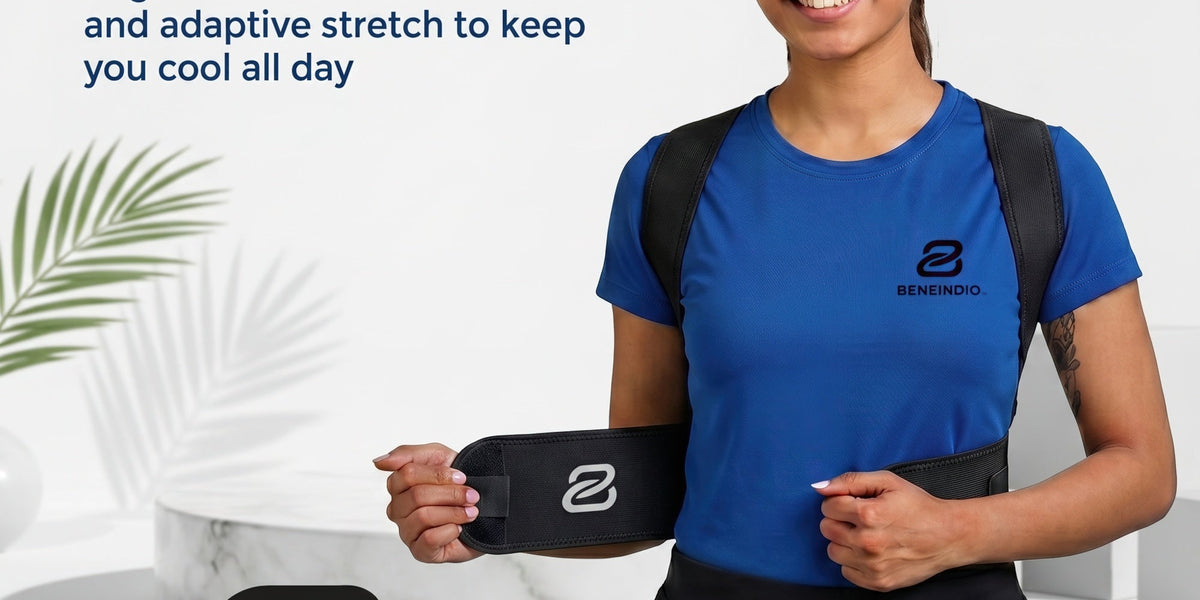
Most posture correctors are a light strap that loops around your shoulders and crosses at the upper back. When you sit or stand upright, you barely feel it. When your shoulders start to round forward, the straps tighten slightly.
That small change in pressure is the whole point. It brings your attention back to how you're sitting, often at the moments you'd otherwise miss: deep in a laptop task, scrolling your phone, or leaning over the kitchen counter.
It is a cue, not a cast. It doesn't hold your spine in place or do the work of your muscles. You still choose to sit up, and the strap simply reminds you to.
Does it work? An honest look
It works for one job: helping you notice your posture. Research on posture correctors is still limited, and most studies are small, so be wary of anyone promising more than that.
What a posture corrector can do
- Remind you, many times a day, when you start to slump
- Make you more aware of how you sit at a desk, on the sofa or on your phone
- Feel supportive and comfortable during long stretches of sitting
What it can't do
- Build the strength your back and shoulders need to hold good posture on their own
- Undo hours of sitting without movement breaks
- Treat back, neck or shoulder pain, or any injury or medical condition
- Replace advice from a physiotherapist or doctor
The honest way to see it: a posture corrector helps you notice, and movement helps you change. You need both.
How long should you wear a posture corrector?
Start small and build up slowly. The general guidance physiotherapists commonly give is to use one for short blocks of time, not all day.
| When | How long at a time | Tip |
|---|---|---|
| Week 1 | 15–20 minutes, once or twice a day | Get used to the feel. Wear it during the task where you slump most. |
| Weeks 2–3 | 30–45 minutes, once or twice a day | Add gentle movement breaks between wears. |
| After that | Up to 1–2 hours a day, in blocks | Use it as a check-in, not a constant. |
A few simple rules:
- Never sleep in it. Your body needs to move freely at night.
- Not all day. Many physiotherapists caution that wearing a strap for hours on end can mean you lean on it instead of your own muscles.
- Take it off straight away if you feel numbness, tingling, chafing or pain.
- Listen to your body. These are starting points, not targets. Shorter is fine.
If you have any health concerns, ask a physiotherapist what suits you before you start.
How to get the most from it: pair it with movement
The reminder is only half the habit. The other half is giving your upper back and shoulders a little movement so sitting upright starts to feel natural.
A few easy moves you can do at home, no equipment needed:
- Shoulder blade squeezes: draw your shoulder blades gently back and down, hold for a few seconds, release.
- Chin tucks: slide your chin straight back, as if making a small double chin, then relax.
- Doorway chest opener: rest your forearms on a door frame and lean forward gently until you feel your chest open.
- Wall slides: stand with your back to a wall and slide your arms up and down slowly.
And a few everyday changes:
- Stand up and move every 30–45 minutes when you're sitting for long stretches.
- Raise your laptop or phone closer to eye level.
- Wear your posture corrector during the task where you slump most, then take it off and move.
For a gentle plan that builds these into your week, try our Better Posture at Home: A Simple 4-Week Habit Plan.
Who should check with a professional first
A posture corrector is a fitness accessory, not a medical device. Talk to a doctor or physiotherapist before using one if you:
- Have ongoing back, neck or shoulder pain
- Have an existing injury, or are recovering from surgery
- Have a diagnosed spine or joint condition
- Are pregnant or breastfeeding
- Often feel numbness or tingling in your arms or hands
They can tell you whether a posture corrector suits you, and what else might help.
Choosing and fitting one
A posture corrector only helps if you're happy to wear it. Look for:
- Adjustable straps, so you can set a gentle cue rather than a tight pull
- A low profile, so it sits flat under everyday clothes at home or at work
- Soft, breathable material that won't rub during longer wears
- The right fit: measure around your chest and check it falls within the size range on the product page before you order
When you put it on:
- It should feel snug, not tight. You should be able to slide two fingers under each strap.
- The straps shouldn't dig into your armpits or press on your neck.
- Wear it over a thin layer, like a cotton top, to avoid chafing.
The Beneindio Posture Corrector is adjustable and low-profile, fits chest sizes from 28 to 45 inches, and is designed to sit quietly under your clothes while you get on with your day.
Frequently asked questions
Can I wear a posture corrector all day?
It's best not to. Short blocks of time work better as reminders, and many physiotherapists caution against relying on a strap for hours on end.
Can I sleep in a posture corrector?
No. Take it off before bed so your body can move freely while you sleep.
Will a posture corrector weaken my muscles?
Used for short periods alongside regular movement, it's unlikely to replace your muscles' work. The concern is mainly with wearing one all day, every day, with no exercise.
How long before I notice a difference?
Many people notice they catch themselves slumping more often within the first week or two. Lasting change comes from the habits and movement you build around it, over weeks rather than days.
Can I wear it under my clothes?
Yes. A low-profile corrector sits flat under a T-shirt, kurta or shirt, so you can wear it at home or at your desk.
Does a posture corrector help with back pain?
It isn't a treatment for pain. If you have back, neck or shoulder pain, see a doctor or physiotherapist first.
Is it suitable for both women and men?
Yes. The Beneindio Posture Corrector fits chest sizes from 28 to 45 inches; adjust the straps until the fit feels snug but comfortable.
A gentle reminder, on your terms
A posture corrector won't do the work for you, and it doesn't need to. Think of it as a quiet tap on the shoulder during the parts of your day when you lose track of yourself.
Wear it for a short while, move a little, and let the habit build at your own pace. No pressure, no perfect routine. Just you, showing up for you.
Explore the Beneindio Posture Corrector · Start the 4-Week Habit Plan
Prefer to shop on Amazon? The Beneindio Posture Corrector is also available on Amazon.in.